
New Paris Books for your TBR Pile
10th September 2026
For many years, at the end of each year, I’d compile a list of my top Paris reads of those twelve months. And every year would seem a particularly bumper one for books about, or set in, the City of Light – until a thought occurred: this is not a passing trend. Paris is a literary genre all of its own.
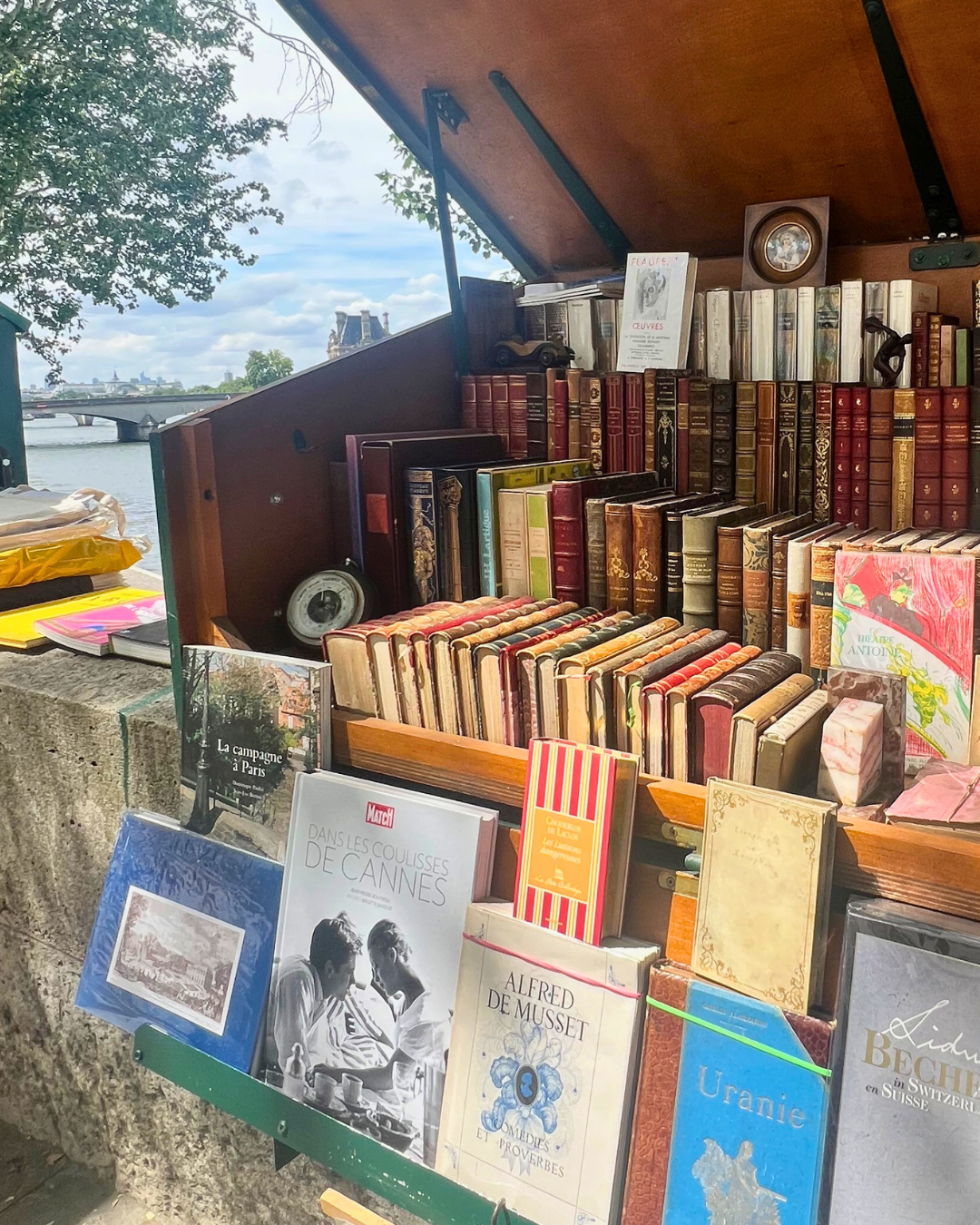
Paris is particularly great for scene-setting. It’s why so many artists, directors and authors have ventured to the City of Light for creative inspiration. There’s the bewitching and ever-changing light, for one; the majestic monuments; the decorative architectural touches; the alluring nooks and crannies … With every turn or tilt of the head, there’s something preening for your attention (or camera lens or canvas), or a scene that wants to play out (whether on a screen or on a page).
The combination of aesthetics and atmosphere is such a powerful one. It’s a city that is so much more than a background. Paris is a character in itself.
A friend who lives in Paris tells me the city keeps her on her toes; it ‘engages’ her at every minute of the day, heightening all emotions. It can be exhausting at times, she admits, but there’s never a dull second. Every day feels like living.
So, no wonder memoirs set in Paris are particularly lush and enlightening, or that many fiction writers gravitate to Paris to give their stories extra depth or a dash of je ne sais quoi.
Paris is also especially inspiring for historians and historical novelists, because the history in this city is as rich and layered as a millefeuille.
As Edward Chisolm writes in his introduction to Murder in Paris ’68 (more on which below), Paris is a ‘place that beguiles the imagination like nowhere else. Immortalised in art, revolution and fiction, history in Paris doesn’t so much linger around you as insist on being heard. At any moment, you might find yourself walking through a Gustave Caillebotte painting, across the site of a Resistance shootout or ducking into a brasserie in the imagined footsteps of Jake Barnes or Inspector Maigret.’
And then there’s the social history of Paris – the story of its many fascinating citizens (both born-and-bred and honorary). From Eleanor of Aquitaine to Catherine de Medici to Madame de Pompadour to George Sand to Joséphine Baker … Parisians have had major main-character energy for centuries.
Reading about Paris and its people is an endless series of rabbit holes; sometimes a footnote in a history book is all it takes to tumble into a fabulous story that is yet to be told.
The initial inspiration for my debut novel, The Parisian Corset, was a snippet in the 1954 memoir of Edna Woolman Chase, American Vogue’s editor from 1914-52; she makes a passing reference to the French Vogue team having fled Paris as the Nazi advanced, holing up in a dilapidated château in Bordeaux. I couldn’t get the vision out of my mind. And I realised, while I knew that one of the Nazis’ first points of order was to take over the press and turn it into a propaganda machine, that I had no idea what happened to Vogue beyond this. As I investigated, I fell in love with the Vogue team and found myself in awe at how they navigated the occupation. And because these rabbit holes are often so twisty and turny, my research led me to a photograph I have long loved: that of Mainbocher’s corset by Horst P. Horst, which was the last image he took in Paris before fleeing the city himself.
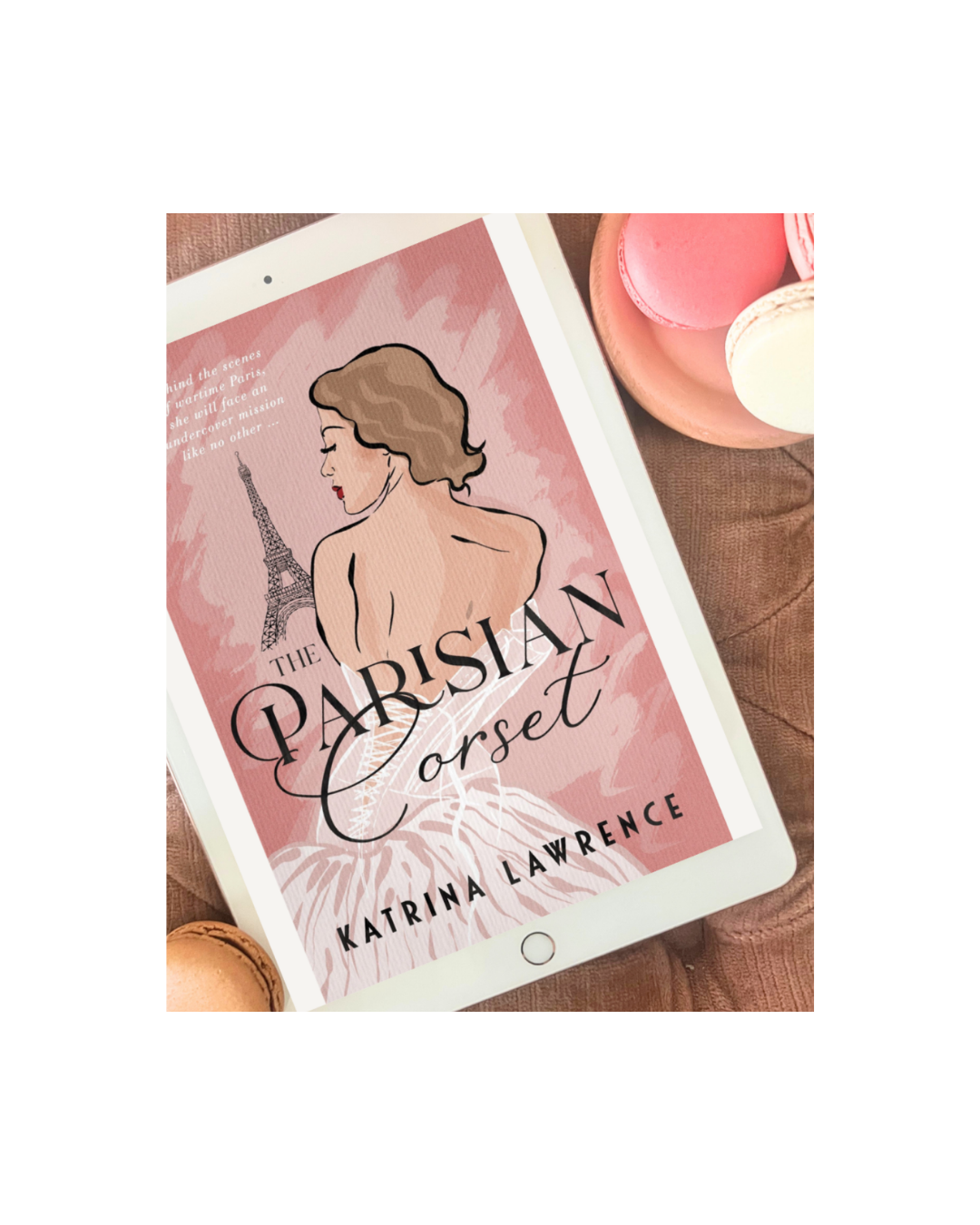
The Parisian Corset will be released in Australia and New Zealand on 1st December and is available for pre-order now. I’ll announce release dates for other markets soon, but in the meantime The Nile is particularly great for international shipping.
For those of you looking for a Paris book to read right now, you’re spoilt for choice because this particular genre has been supercharged of late. Here are some titles that are worthy of your TBR pile …
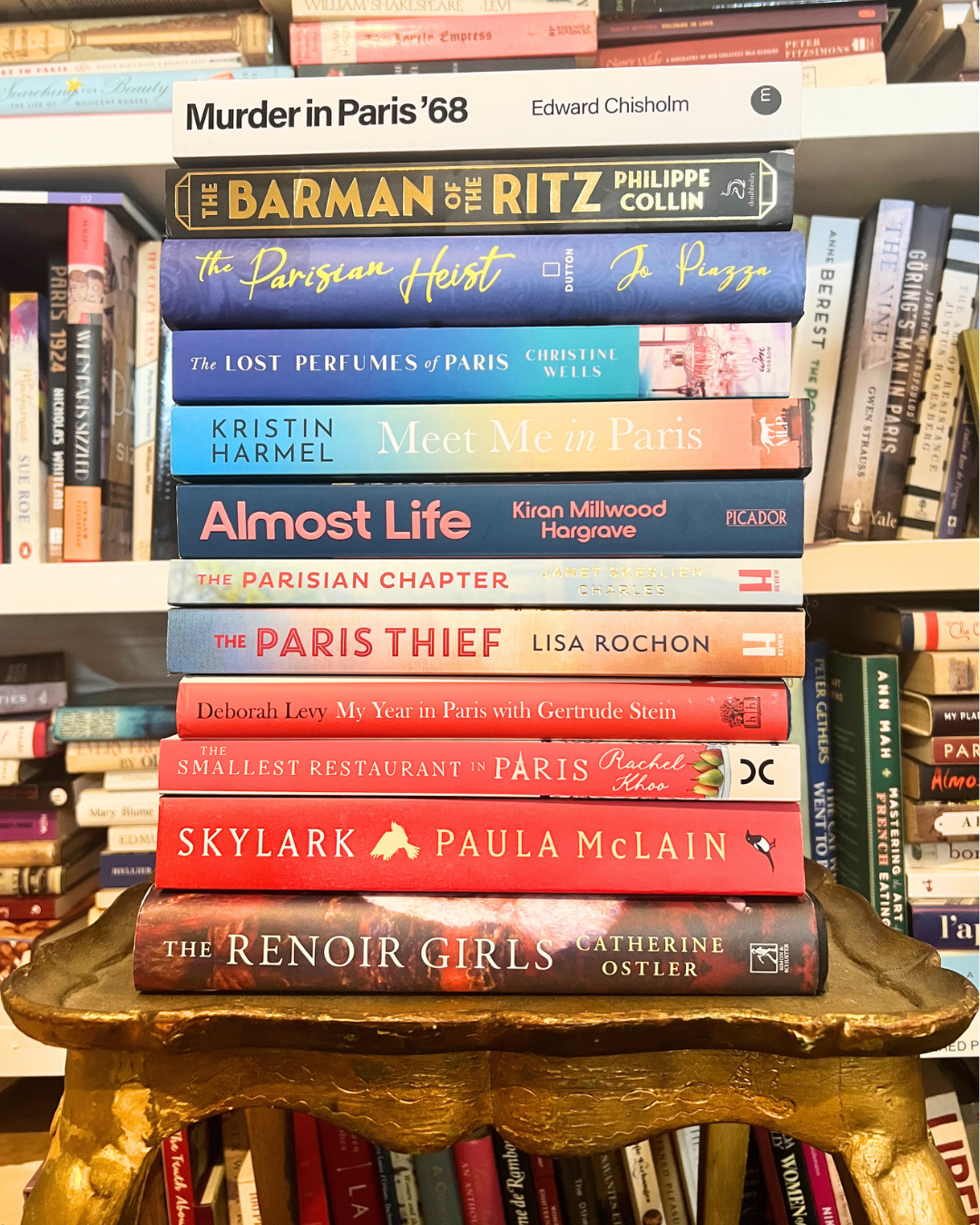
Murder in Paris ’68: A True Story of Death and Glamour by Edward Chisolm. From the author of the hilarious memoir, A Waiter in Paris, this narrative non-fiction is jaw-droppingly juicy – a potent cocktail of crime, scandal, politics and celebrity.
The Barman of the Ritz by Philippe Collin. A runaway bestseller in France, this retelling of the wartime story of the hotel’s legendary Frank Meier is now available in English and it’s utterly compelling.
The Parisian Heist by Jo Piazza. There’s so much to love in this dual-time historical fiction: art, money, power, family disfunction, female friendship – and all in a whirl of intrigue, action and mystery. It’s a fabulous ride of a read, as entertaining as it is informative, bringing to life the legacy of Jo Van Gogh, who was instrumental in her brother-in-law’s posthumous fame.
The Lost Perfumes of Paris by Christine Wells. This historical novel – set in the 1950s world of French perfumery – is as swoon-worthy as the fragrances it so beautifully describes. Like the highest-quality perfume, it’s more than just pretty top notes; themes of feminism and family are the heart and base of a story that lingers like the best Parisian sillage.
Meet Me in Paris by Kristin Harmel. The popular historical novelist (think The Book of Lost Names and The Winemaker’s Wife) was inspired by Love Actually for this contemporary tale. In weaving together a cast of characters of different ages and at different life stages, Harmel has created a tapestry of a story that touches all the emotions. I alternated between crying, smiling and sighing throughout this one!
Almost Life by Kiran Millwood Hargrave. Starting out on the sun-soaked steps of Sacré-Cœur in 1978, this novel leads us into a Paris (specifically the gritty streets of the Marais) that is rarely glimpsed in the pages of historical fiction. Following the intertwining lives and complicated love of Laure and Erica is an exercise in patience, and – beware – it’s a super-emotional journey, with many bumpy highs and lows along the way. I felt all the feels while reading this – often bursting into tears or huffing in frustration – but my most constant response was swooning at the utter gorgeousness of Kiran’s prose.
The Parisian Chapter by Janet Skeslian Charles. This is a beautifully feel-good sequel to the bestselling The Paris Library, following Odile’s neighbour Lily back to Paris, and to a job of her own at the American Library, fifty years after Odile fled the city. It’s a book about books, of course, but also friendship and forgiveness.
The Paris Thief by Lisa Rochon. Alternating between bohemian Montmartre and Nazi-occupied Paris, where our protagonist has been tasked with protecting the Mona Lisa, this novel not only covers the wartime story of the Louvre’s incredible efforts to safeguard its masterpieces, but also some fascinating back-story of why Mona Lisa became so legendary in the first place.
My Year in Paris with Gertrude Stein by Deborah Levy. This genre-defying read – think fiction, biography and a musing in one – follows an unnamed narrator in her attempt to write an essay about the avant-garde icon. For those who like their books lyrical and inventive.
The Smallest Restaurant in Paris by Rachel Khoo. The adorably charismatic chef leaps off every page of this memoir, which is as delightful to inhale as a platter of Parisian pastries. Speaking of which, each chapter ends with a delicious recipe – moreish snacks like gougères or main course suggestions such as ‘Quiche Raschelle’ or inspired desserts à la ‘A Parisian Mess’ – so stash this in the kitchen once your bedside table has finished with it.
Skylark by Paula McLain. The author of The Paris Wife interlaces a fabulous tale of Paris ‘above and below’: a seventeenth-century woman’s quest for artistic freedom and a doctor’s dangerous Resistance work during the city’s Nazi occupation, with Paris’s ancient underground tunnel network playing another lead character.
The Renoir Girls: A Hidden History of Art, War & Betrayal by Catherine Ostler. The story of the Cahen d’Anvers sisters – who were all painted by Renoir – is as mesmerising as it is heart-shattering. This book will make you want to scream and weep. It’s a painful tale – about betrayal, not just within a family, but by a nation of its own citizens who had given so much to their country – but that only makes this read all the more important.