
1st November 2026
Perhaps magazines seem a little last-century to you; maybe you feel they have no place in this digital world. Allow me to convince you that they’re as necessary as ever.
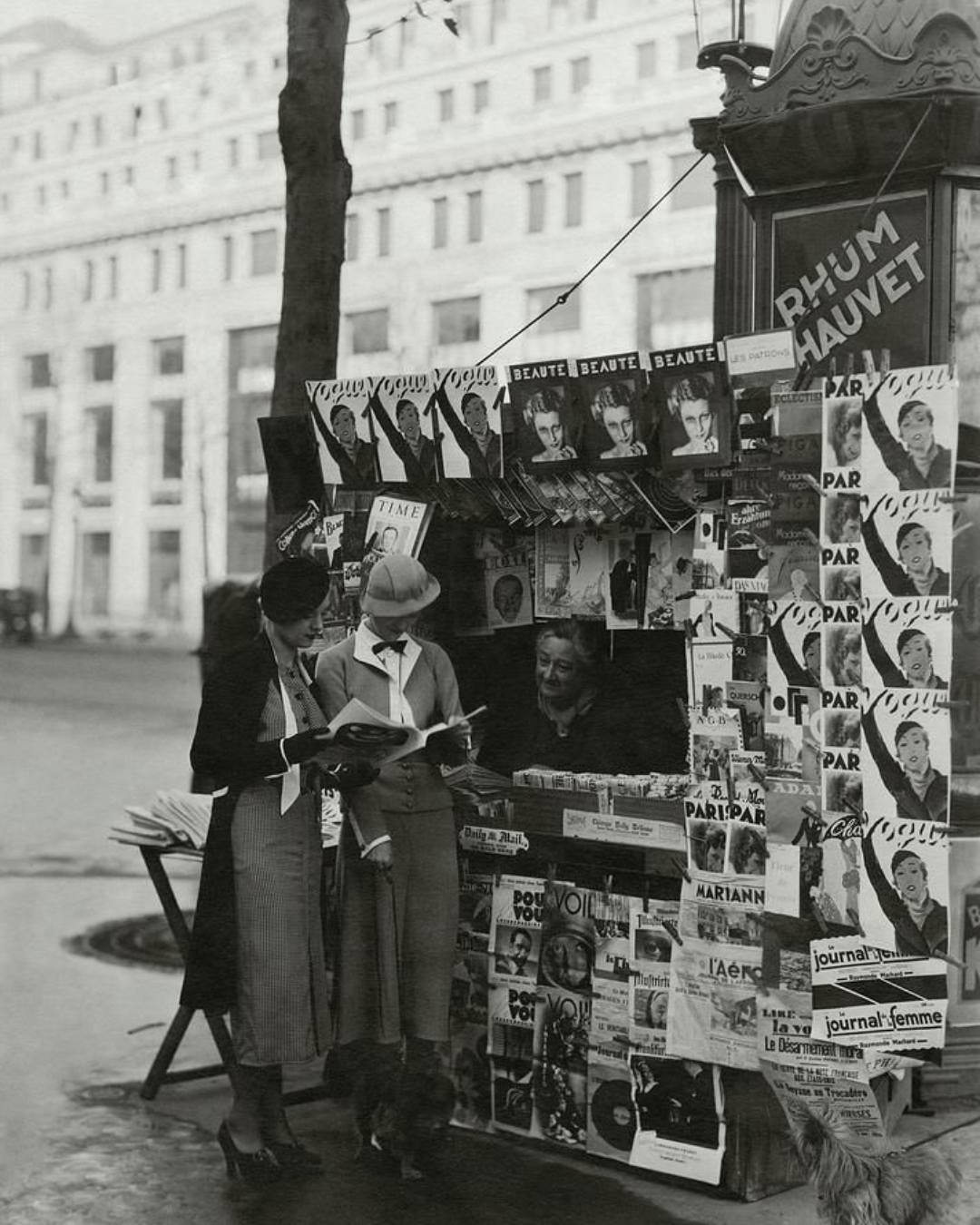
But first, let’s look at the argument that internet is over …The Dead Internet Theory has been kicking around for a while, but as Wired has reported, ‘the proposition that a vast majority of the interactions on the web are fake, bots talking to other bots … has accrued more supporting evidence recently.’
While the internet once offered ‘glimmers of community and joy, of artistic and intellectual exchange’ that ‘were enough to balance out the toxic junk’, the landscape is now largely rotting into a wasteland of AI slop and fake news.
And how’s this: one cybersecurity firm referenced by Wired believes that there are more bots than humans using the internet now. That’s wild!
Wired spoke to technologist John West – author of The Internet Will Die, and So Will You: On Learning to Live in our Digital Age – who confirms that ‘platforms once seen as enduring archives of knowledge and communication are being cannibalized by ideological warfare and basic greed.’
Academics used to fill websites with solidly researched, footnoted and scientifically sound information; writers lovingly laboured to produce thoughtful and thought-provoking blogs; and legacy media raced to replicate their brands (and reams of reports) online … but that work and knowledge has now been scraped and regurgitated as slop.
And search engines that once helped drive traffic to information sites now prioritises AI summaries, which is reducing clicks to the sites that provided the information in the first place. Rubbing salt into the wound is that AI summaries often misinterpret information, or hallucinate it completely.
What’s more, thanks to generative AI, genuine creators are losing out to those who churn out supposed art with a few software prompts. The upshot is, once-strong online communities are being erased. Really, why would you bother spending your time and talent creating something that might well be stolen then repackaged with no credit nor financial reward to you? (And yes, I fully appreciate the irony of writing this, knowing that my work might well be scraped too!)
And so, websites are withering away, with out-of-date information and links that go nowhere.
But that’s not the only reason the internet might ‘die’ – West also points out that while the internet is vast it’s also fragile, based on fibre-optic cables that can be damaged or sabotaged.
Not to mention the fact that the growth of this new version of the internet will rely on data centres that no community wants in its own backyard.
So, the internet suddenly seems more ephemeral than ever.
You know what doesn’t seem abstract right now? Magazines.
While we’ve all seen the headlines about the demise of print media, and while many still struggle to survive in this brave new world (People has just announced a cut of 195 staffers), there is nevertheless an argument to be made that magazines are having a certain moment. Life is relaunching this month; The Atlantic is back to monthly publication after years of surging subscriptions; and American Vogue has a new strategy of fewer issues per year, with a focus on collector-item quality.
And that seems to be the key: quality over quantity. In a world where there’s too much noise, too much stress, too much rush, where everything and everyone feels spread too thin, good magazines offer an escape into a contained and comforting space. There’s no endless scroll; no jarring contrasts of imagery and information; no algorithm manipulating what we see. Just a well-curated array of information laid out in an easy-to-navigate way, inviting you to muse and meditate. Not to mention beautiful photographs and graphics that live up to the gloss of the paper on which they’re printed, and satisfy that very human need for beauty.

Magazines are also human in their physicality. The glossy feel beneath your fingertips, the ear-pleasing flick and eye-pleasing lustre, the ink-varnished scent. It’s all so much more real than anything digital. Something tangible to have, hold and keep. Perhaps that’s one reason why Gen Z is said to be discovering magazines, among other analogue joys. And for older generations, there’s something so nurturing and nostalgic about them, in the reminder of the importance of stopping to enjoy the small pleasures in life.
I know that I’m so nostalgic for magazines it’s almost painful! I worked in women’s magazines for twenty years, and thought my entire career would unfold in that industry I loved so much. I had to eventually pivot, of course, like so many former magazines journalists and artists, and I turned my back on reading magazines for a while, even recycling years’ worth of magazines I’d long collected. It pains me to only have a few piles left now, but they’re all the more special for that. Every now and then, I pull out a random issue, and within a flicker I’m back in the nineties or the noughties, reminiscing about one-time phrases or fashions.
You can’t do that with a web page. Especially one that might not exist tomorrow.
Magazines are time-capsules. Packages of valuable information for future historians – information that can’t be changed or manipulated. In this way, a magazine revival seems almost quietly rebellious, a silent protest against the tech bros who want to shape the future by rewriting the past.
Maybe that’s what I most love about magazines. They’re both old-fashioned and future-proofing. Quaint and subversive at once.
Reading a magazine – or a book, for that matter – also future-proofs ourselves. By reading quality information – that has been researched, fact-checked and edited – we force our minds to keep active, our attention spans to stretch, our brains to stay young.
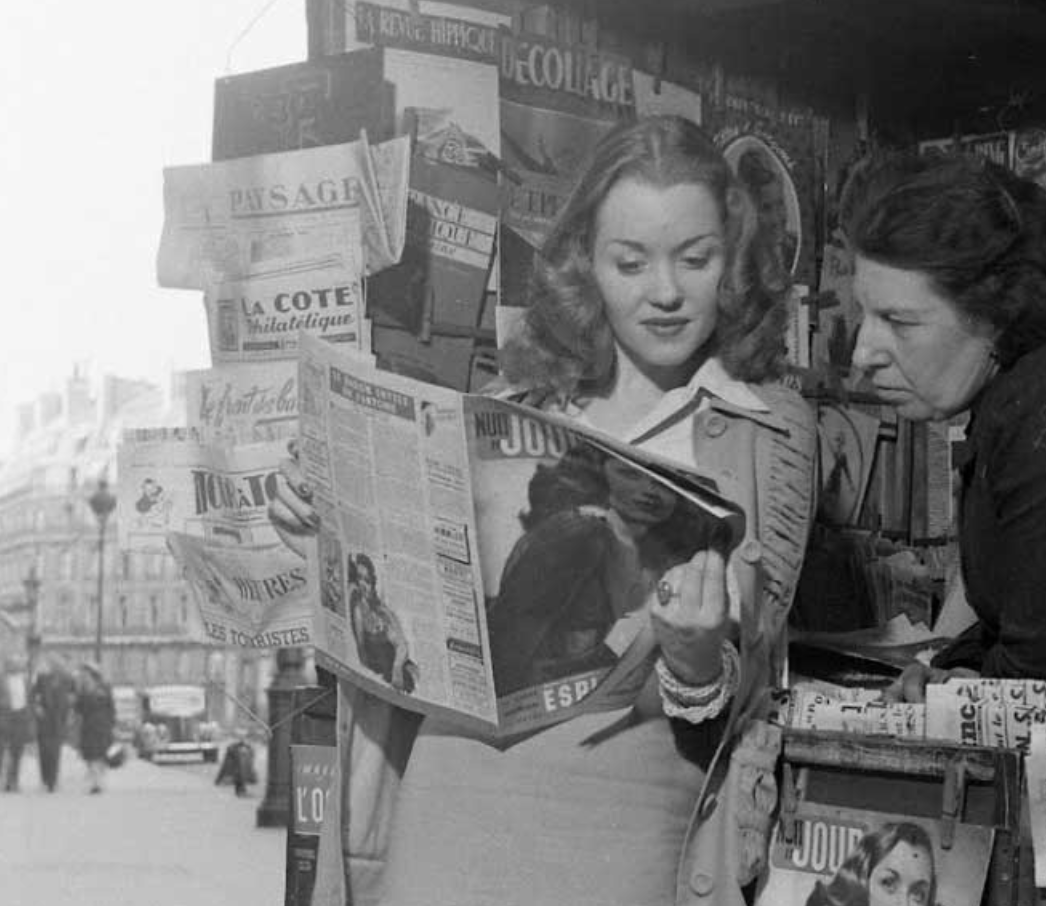
But, if we’re going to bring back magazines as a regular aspect of our lives, we also need to revive the habit of magazine shopping. That’s not particularly easy when so many newsagencies have closed on the world’s high streets. Personally (and because I like to take every subject back to Paris), I’d love to see Parisian-style news kiosks pop up on streets the globe over.
These kiosks were in the headlines in recent years, when it was announced that the famous and much-loved Haussmannian kiosques were to be replaced by modern versions.
While many mourned the news, the change was at heart about making the important work of a kiosqueur more comfortable for modern times – meaning this industry will have a better chance of a future.
True, these kiosks now sell an arrange of trinkets to combat years of declining print sales. But there’s something about a Parisian news kiosk that makes magazine shopping enticing. There’s a great range of both weekly and monthly fashion and lifestyle magazines, for one, but also interesting special-edition magazines produced by the leading newspaper titles.
As Messy Nessy has pointed out, a unique French law requires kiosqueurs to stock all titles. That not only means there’s a juicy selection on offer, but a range of opinions that one is not exposed to when on social media, where algorithms double as a form of censorship.
A Parisian kiosqueur, she writes, who ‘cannot express his or her political views through its platform, is probably one the most valuable resources of information for achieving a more balanced society. We just need to use it more!’
Another wonderful Parisian champion of magazines is the Smith & Son boutique on Rue de Rivoli, whose story goes back to 1870. The press corner is still in the back of the ground floor and as brimful as ever, reminding us of the old-fashioned joy of newsagency-browsing. And to enhance the nostalgic mood, flick through your glossy purchase while enjoying cream tea in the historic café upstairs.
Of course, we don’t all have Smith & Son, nor a kiosque à journaux, on our doorstep (le sigh). Still, as we Paris lovers of the world know, it’s easy to infuse many Parisian-style rituals into the everyday. And perhaps stopping to buy a magazine, and sitting down to savour it along with a coffee and croissant – while keeping your phone firmly tucked away in your handbag – might just make life seem that bit more pleasurable, a little less hectic and harried, once more.
Photography: George Hoyningen-Huene for the February 1933 edition of French Vogue; Jane Birkin for the Daily Mirror, 1970; actress Barbara Laage by Nina Leen for a 1946 issue of Life magazine.