
Paris is a Story
10th June 2026
I write at a little desk in my attic, a room that’s filled with tottering piles of books and all kinds of dusty curios and trinkets. Through the dormer window, beyond the branches of a large plane tree, there is a building with a zinc, mansard-style roof. I like to call it my little slice of Paris, even though home is on the other side of the world. After all, isn’t that the dream of every writer – to make art in a Parisian garret?
It’s a cliché, but as with all good clichés, there’s a story behind it. Specifically, Henri Murger’s Scènes de la Vie Bohème, an 1851 book adapted from a series of sketches Murger had written for a Left Bank newspaper in the mid-1840s. (You might have heard of its operatic adaptation: Puccini’s La Bohème.) In his thinly veiled account of Latin Quarter living, Murger cast himself as the dreamer of a poet, Rodolphe, and his frail girlfriend Lucile as fading-beauty Mimi, and took further character inspiration from his friendship group, which included the photographer Nadar and Théophile Gautier (who wrote the libretto for that ultimate Romantic ballet Giselle).
Murger described this world as bohémien; a term first used in the 1830s, it was (as Jerrold Seigel writes in Bohemian Paris) ‘the common French word for gypsy … which erroneously identified the province of Bohemia, which is now part of modern Czechoslovakia, as the gypsies’ place of origin.’ Like the realm of the Roma gypsies, Murger’s Bohemia was a world within itself. It was anti-establishment — a reaction to bourgeois life — and populated by artistic souls. The author so romanticised the concept of the struggling, suffering creative in a chilly garret that the bohemian myth endures to this day.
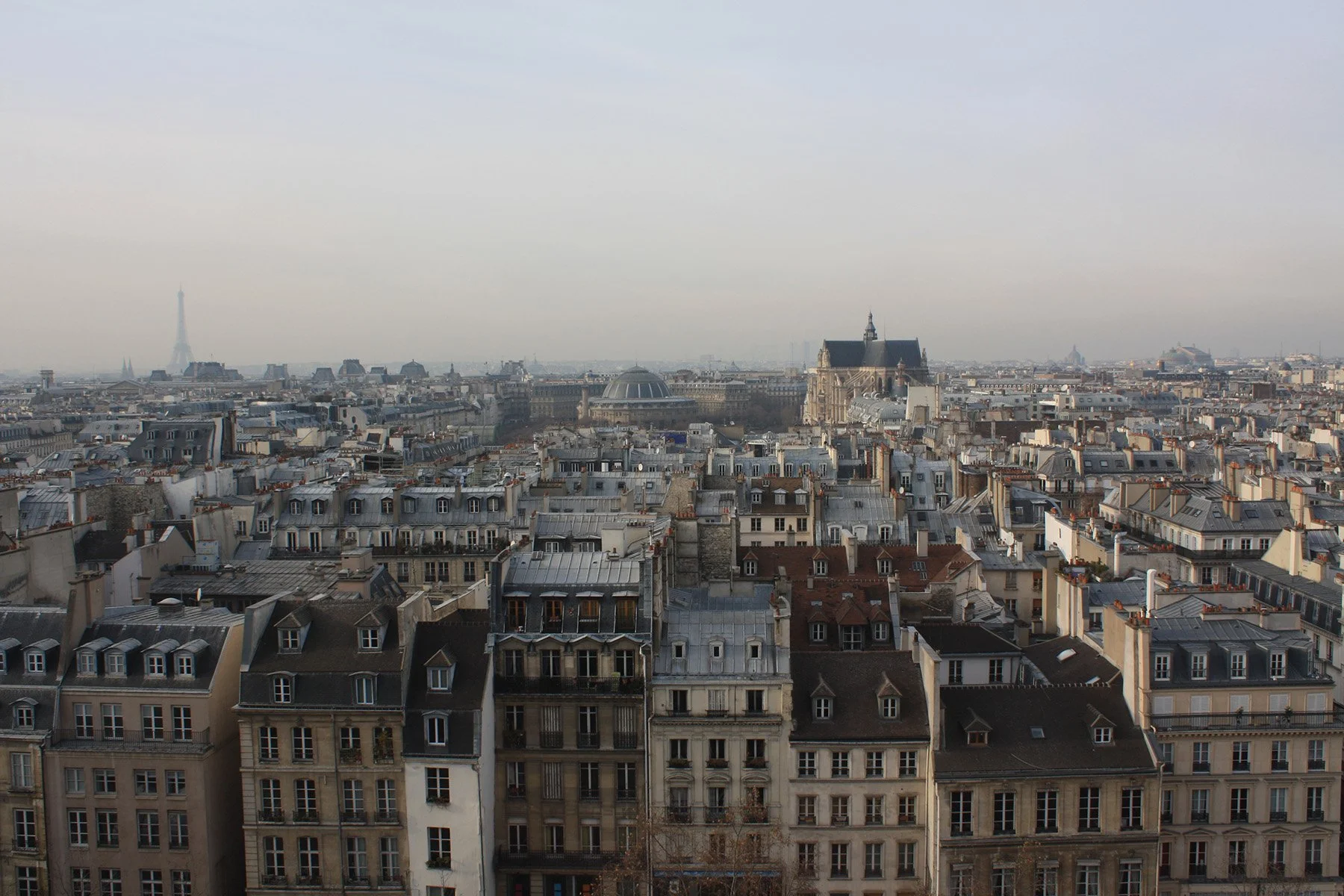
By the time Murger was suffering for his prose in a cold Parisian attic, artists had been flocking to Paris for decades. The top-floor maids’ rooms were cheap, for one. And had incredible views across the glinting tiled rooftops. But while the luminous light of Paris was surely one factor – and would later have Impressionists in a swoon – there was another kind of light that attracted artists to Paris like bees to a honeypot. Paris became known as the City of Light during the Age of Enlightenment. In the eighteenth century, it was the capital of the modern world. Coffee houses were opening, offering stimulating brews and an array of newspapers to inform and inspire, and the day’s leading thinkers held mind-spinning conversations about science, philosophy and art. In the king’s absence – he was cocooned out in his palace at Versailles – Paris became an alternative city, a city for the avant-garde.
Baron Haussmann might have torn down Murger’s Paris in his mid-nineteenth-century makeover of the city, but his zinc rooftops retained cheap top-floor rooms that attracted a new generation of artists, who also loved the terrace cafés that now sprawled over the wide Parisian footpaths. These cafés, which have long allowed customers to while away time with a notebook and single cup of coffee, arguably helped turn Paris into a writer’s city. There is no better place for walking and thinking, then sitting down to ponder some more – and, perhaps, start work on that future book of yours.
Paris might inspire musing, but it’s also the muse. You see, after all this time, Paris’s history is one of stories. You can smell it in the cool, dank stone; see it on the plaques that dot the city’s façades; feel it as you follow in the footsteps of so many iconic ghosts.
Visit Paris enough, and you’ll find yourself lured into its past as naturally as you might detour down a curious-looking cobbled alleyway. Every turn is a time portal, a tumble into a rabbit hole. And the more you learn about Paris, the more you want to know. For a writer, it’s a city of endless inspiration. And if you can’t take time out of your regular life to toil away in a bohemian Parisian attic, writing (or reading) about Paris is not a shabby alternative.
