Paris is a Writer’s City
1st July 2026
When twenty-four-year-old Emma Smith arrived in Paris in the summer of 1948, her debut book, The Maidens’ Trip, was about to hit shelves, and she was working on what would be her 1949 novel, The Far Cry. As chronicled in Anne Sebba’s excellent Les Parisiennes, Emma escaped the stifling heat of her cheap Left Bank hotel room by taking her typewriter to Square du Vert-Galant (at the western tip of Île de la Cité), where she sat riverside on the cool flagstones, tapping out words all day long.
One day, the photographer Robert Doisneau was wandering by, snapping images for Paris Matchmagazine. His photograph of an engrossed Emma, barefoot and breezily dressed, typewriter perched on lap, has to this day been the poster child for Paris as a writer’s city.
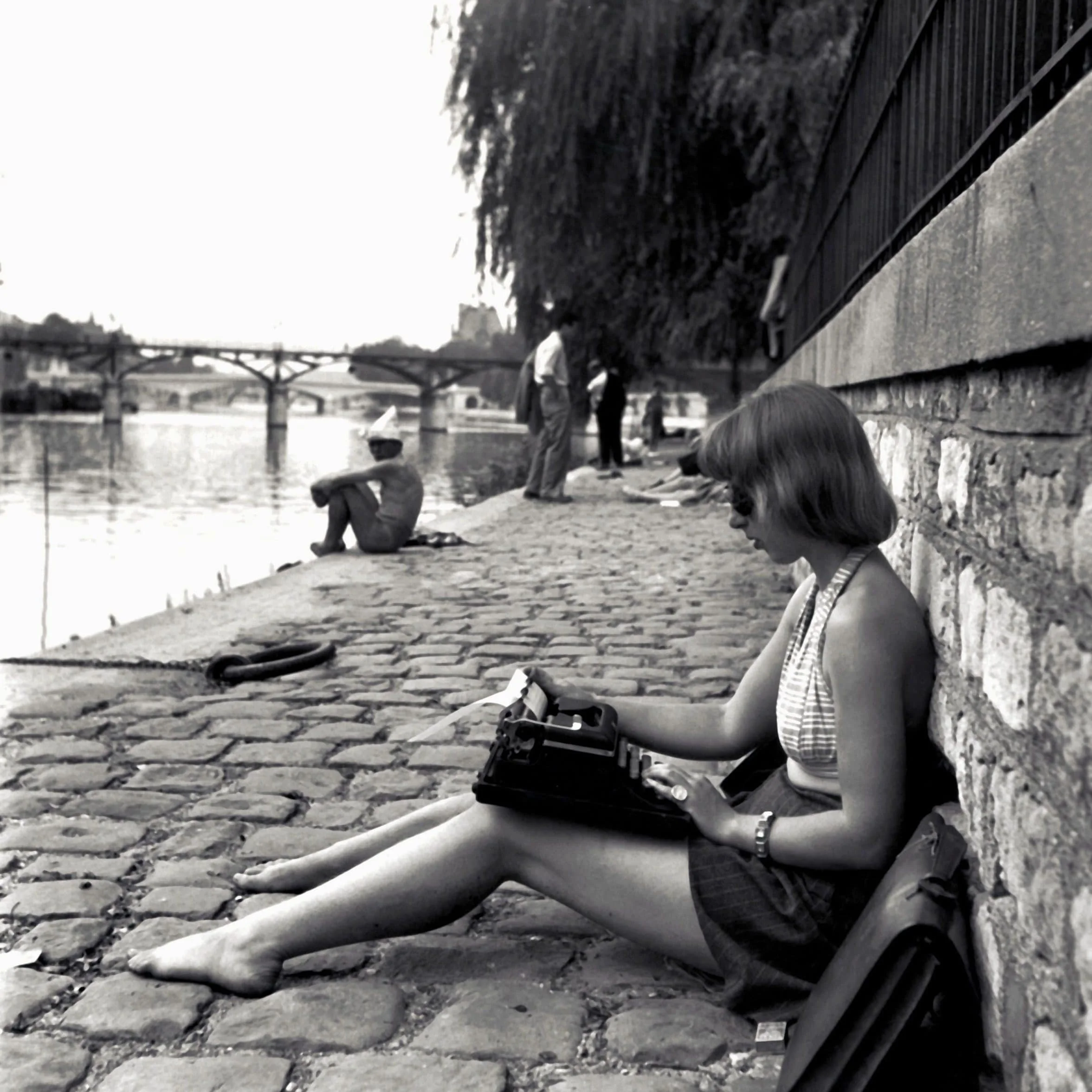
Photograph: Robert Doisneau
Of course, the history of Paris as a capital of artists goes back centuries, but the twentieth century crowned the city as a literary mecca. Think Edith Wharton, Ernest Hemingway, James Joyce, Gertrude Stein, Anaïs Nin, James Baldwin, Richard Wright … The list of writers who have made Paris their muse (and sometimes their home) could go on and on.
These days, we can travel virtually for inspiration – and social media, streaming channels and Google Street View all have their place for understanding the bigger picture. But nothing still beats a Parisian stint if you’re planning to write a book about, or set in, this city. That’s because Paris is a place that’s particularly rich in the finer points of life, and it’s the honing in on, and understanding of, these small details that make stories come alive. These details tell stories of their own, of the past — but they’re stories that whisper, that you must lean in to hear.
Follow old, cobbled streets that still feature the central gutters of the one-time sewerage system, and you’ll pass odd metal contraptions fitted to the corners of some façades — known as empêche-pipi, they prevent ‘wild peeing’ even to this day.
Note the stone or metallic fenders by old coach doorways that used to stop carriages from knocking into the sides, or the spiky bars on doors that once held feed for horses.
Snoop in open-doored courtyards, looking for former stables or a now-decorative water pump.
Stop and linger across from a closed door that particularly takes your fancy (there’ll be many; Paris is a city of grand entrances!); perhaps a resident will walk out, and you’ll get a glimpse into the secret garden within – and possibly a future novel of yours.
Look up to find carvings of ancient street signs, or the fadings of Belle Époque shop signs and painted billboards, or building plaques that name former residents. Or further still to the skyline, admiring the zinc Mansard rooftops of the Haussmannian buildings, and the occasional medieval gabled window that boasts an older outlook over this city.
Swoon over the lampposts, their lanterns as ornate as earrings, and wrought-iron balconies so dainty they seem fashioned from lace.
Go into a café and look for clues to its former life: a repurposed telephone booth, an old sign for a billiards room, framed art on walls once gifted by hungry painters who couldn’t afford to pay cash for their food.
Paris is a living history degree, but if some lessons prove too obscure to understand, there are guides and trivia books in anglophone shops like Shakespeare and Company that will help.
Or ask a local. Parisians love their history, and love to show it off. I was once staring through a gate at what I’d read to be the love nest built by King Henri II for his mistress Diane de Poitiers. A resident came out to tell me the story, explaining that his apartment still featured the sixteenth-century painted ceiling beams.
And talk to the bouquinistes, the Seine-side booksellers whose stalls are treasure troves of curios, and who themselves are hoarders of history. Flip through their dusty boxes of photographs of past Parisians characters, or postcards that were penned in elegant script decades ago. Perhaps someone is calling you from history, begging to be seen and heard once more.
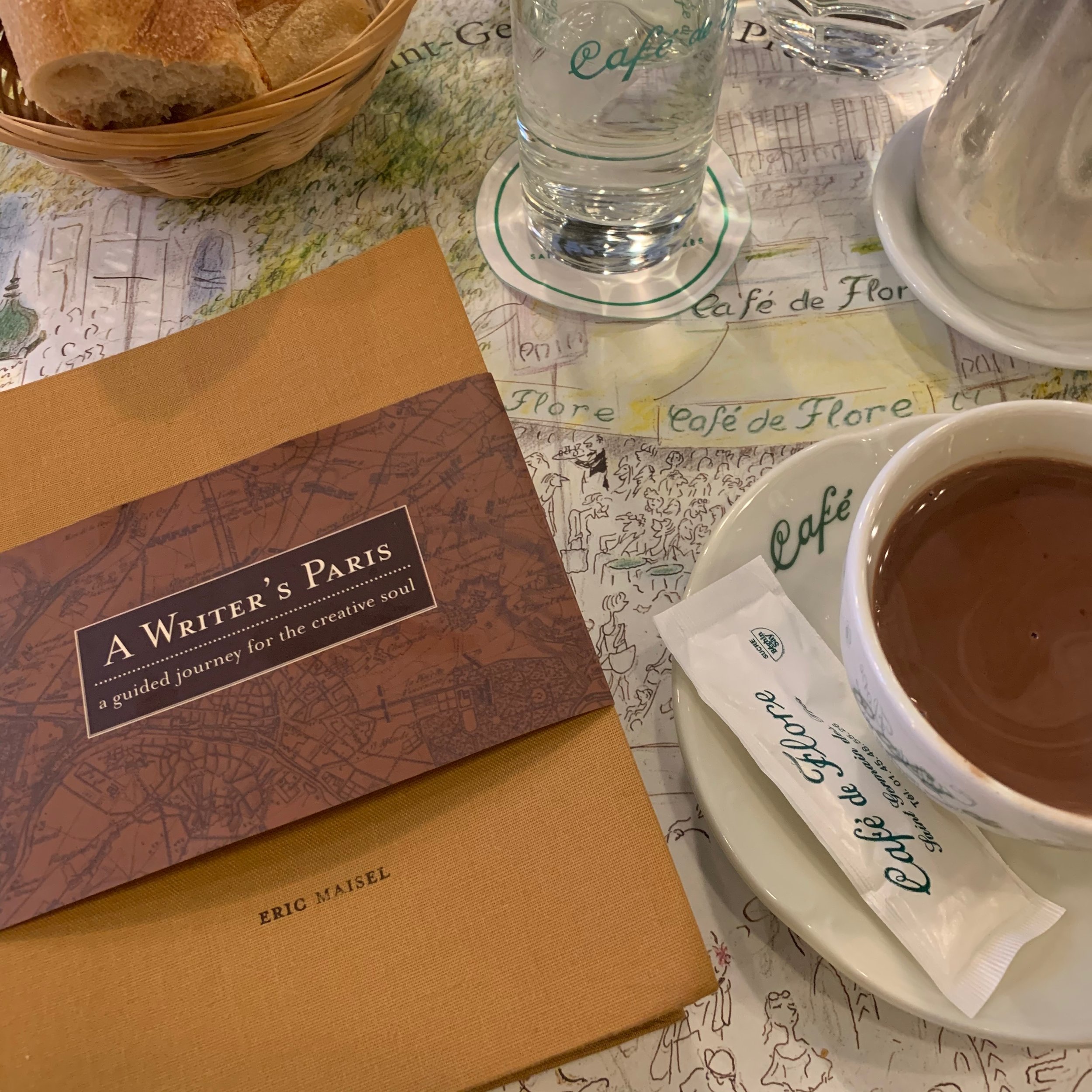
While you’re here, buy the usual literary souvenirs — A Moveable Feast, Bonjour Tristesse, Claudine in Paris, Les Misérables … And by all means, visit these authors’ old haunts, the places where they used to write. (It’s a cliché, yes, but I will never not get chills sitting in Café de Flore, imagining Simone de Beauvoir here, working on The Second Sex.) But remember that future Ernest Hemingways would probably not toil away in what are now the touristy likes of Les Deux Magots, so find your own place. Any café where you feel comfortable. One of the best aspects of Parisian café life is that you can while away hours here with a single coffee.
Even if your book has nothing to do with Paris — like Emma Smith’s A Far Cry, set mostly in India — this city can still be an ideal office. Cafés serve up amazing people-watching potential. Paris is a stage, with the drama playing out on the terraces and footpaths. You’ll see romantic first dates and dramatic breakups, misty-eyed honeymooners and silver-haired soulmates; classically dressed grandes dames and avant-garde-garbed fashion types; and, all manner of chic accessories, including some of the world’s best-groomed dogs.
Everything seems heightened in Paris. Every look, every gesture – the way a scarf is tied, the way a macaron is savoured.
Paris is the kind of place that makes you stop and smell the roses. It makes you look around, see everything with new eyes, in a new and ever-changing light. Whether it’s the peachy softness of dawn or the violet haze of blue hour, you’ll be endlessly inspired to think up novel ways to describe the beauty around you.
And if you’re in Paris for long enough, you’ll notice the small changes that mark the passing of time – the budding blooms, the turning leaves, the new-season fruits at the local markets – again, those details that can bring a book to life.
Paris is endless fodder for writers. And if you do find yourself with writer’s block, well then … at least you’ll be in Paris!