
9th November 2026
‘I was born to know you
To name you
Liberty’
It’s World Freedom Day, which got me thinking about one of my favourite French poems, ‘Liberty’ by Paul Éluard (the most famous line of which can be see etched into this chair in the Palais-Royal garden).
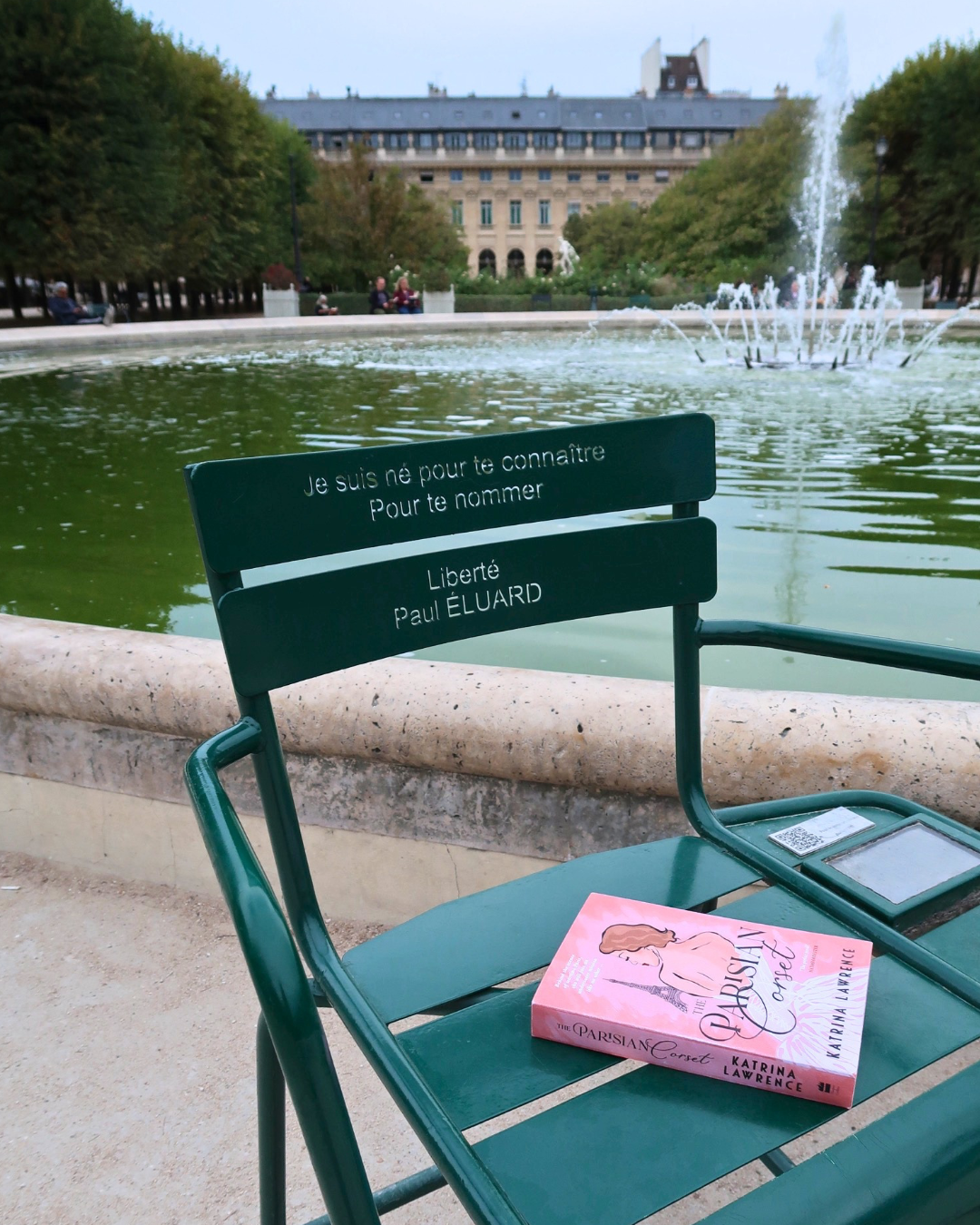
The Surrealist Éluard – who was a friend of Michel de Brunhoff, editor of French Vogue and one of my characters in my forthcoming novel The Parisian Corset – penned his iconic twenty-one-quatrain poem in 1942, during the occupation of Paris. Also a Resistance operative, Éluard wrote numerous clandestine pieces against Nazism, but his ode to liberty is his most celebrated and powerful.
After the poem somehow reached London, where it was published to huge acclaim in 1943, the Royal Air Force began dropping tens of thousands of copies over occupied France during its night-time attacks, to help uplift French spirits.
One Frenchman who caught one of these signs from above was the photographer Henri Cartier-Bresson, a prisoner of war who had just crossed the French-German border after his third escape attempt. He was in hiding at the time, but managed to obtain fake identity papers and make his way to another farm in the Vosges, where he’d buried his beloved Leica camera three years earlier, just before being taken prisoner.
Cartier-Bresson had slipped back into Paris by the time the Allies were landing on the beaches of Normandy; as they closed in on the capital, he was signed up as one of the official Resistance photographers, charged with documenting the Liberation of Paris.
Proving, perhaps, that while wars might sadly be inevitable, we should never underestimate the power of art to fight for freedom.
By the way, if you want to read more about this fascinating period of French history, there are many wonderful books (I’ll list my bibliography for The Parisian Corset soon), but I highly recommend Left Bank: Art, Passion and the Rebirth of Paris 1940-1950 by Agnès Poirier, which is the source of the above information.