
The Parisian Corset & The Prettiest Cover
12th August 2026
I could not think of a more perfect (nor pretty) cover for The Parisian Corset. The book is inspired by the story of French Vogue during World War II and the mystery surrounding Horst P. Horst’s iconic photograph of the 1939 Mainbocher/Detolle corset, and for its cover Louisa Maggio of HarperCollins Design Studio has paid homage to both that stunning corset and the whimsical loveliness of vintage fashion illustrations.
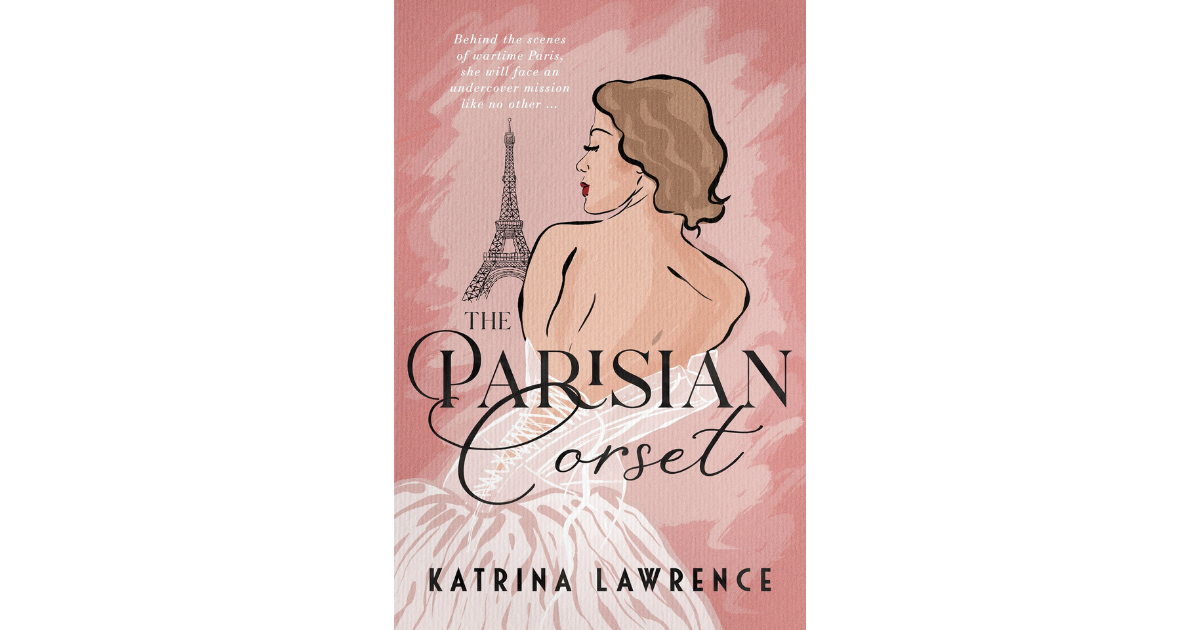
I’m so thrilled that HarperCollins took the time and care to illustrate this cover. Usually for historical fiction, a publisher chooses an image from a photo library for the cover, and this image might or might not line up exactly with how the author has imagined a scene or character. In this case, however, all the stars have aligned: the corset is a beautifully detailed depiction of the one worn by my protagonist, Sophie.
But also, I like to think that Michel de Brunhoff – the editor of French Vogue during the 1930s and ‘40s, and one of my characters – would very much approve of an illustration gracing this cover.
In the thirties, as photography improved in leaps and bounds, Michel was determined to continue championing his beloved illustrators. It’s not that he didn’t see photography as an art – he particularly adored the artistic eye of Horst and André Durst – but for Michel, illustration was a historic art form and as such the ultimate way to honour haute couture.
Before Michel became editor of French Vogue in 1929, the magazine had very much been a Gallic translation of the American edition. Michel – as explained by historian Sophie Kurkdjian in her paper ‘The Emergence of French Vogue: French Identity and Visual Culture in the Fashion Press, 1920-40’ – made it his mission to give his Vogue a uniquely, undeniably French feel.
Michel’s love of art and illustration was in his blood. His father had been a publisher of high-end art books and catalogues (and commissioned the very first Alphonse Mucha poster of Sarah Bernhardt). Michel’s sister, Cosette, married journalist Lucien Vogel, and in 1912 Michel helped the couple set up Gazette du Bon Ton, an exquisite journal that had top artists illustrating the modernist fashions of the times. Gazette’s gorgeous fashion plates caught the eye of Manhattan-based Vogue publisher Condé Nast, who eventually went into partnership with the Vogels, launching French Vogue in 1920.
During that decade, American Vogue’s editor-in-chief, Edna Chase, oversaw the French layouts. It was an era when American magazines were modernising, with photography on the rise, helping to display and sell an increasing number of products in an ever more commercialised world.
When Michel took editorial charge of French Vogue, Edna found herself up against someone more inclined to revere art over commerce, fantasy over reality, tradition over change for the sake of change. She tried to rein Michel in, regularly sending missives complaining about the lack of detail on dresses (and too much arty shadowing in the photographs that he did run). But Michel had haute couture on his side, for that industry loved seeing its designs depicted as high art. Michel also knew what French readers wanted, which was a magazine that would inspire, not just inform.
In the end, the New York office came to accept that Michel knew what he was doing, and if you look at any of his issues – which can be found here, on the BnF Gallica website – you can’t help but agree.
All these years later, there’s something about an illustration that still feels special. Perhaps even more so than before, now that photography has become so ever-present and easy. And sure, generative AI tries to sell itself as a tool that can turn anyone into an artist, but true visual art is all the more superior for that, because it ‘implies time’– as journalist Tara Anne Dalbow writes in ‘The Painted Book Cover is Back’. Hours of effort have gone into a creation, and to respect art is to reward that effort.
It’s also a remembrance of the importance of time, which seems a luxury in an ever-faster world. Taking time for yourself, your hobbies, be they reading or painting, is an indulgence that feels more and more a necessity. It’s a rebellion against hustle culture, a reaching back for what makes us human: creation and connection.
I think that’s why I most love my cover. She might be an illustration, but she’s so much more human for that.